Newsletter


Our Newsletter
Connections
May
26
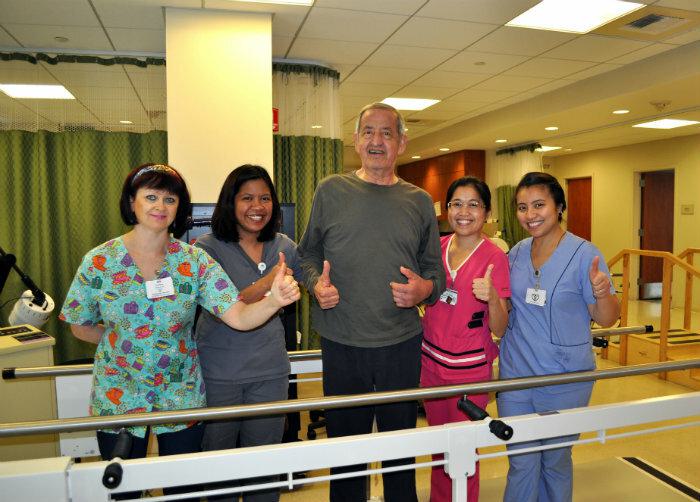
Dedication and Support: A Prescription for Recovery
Short-term in-patient rehabilitation is often a critical factor in recovery after an illness, injury, medical procedure, or hospital stay. Conditions requiring this type of specialized care may include joint replacement rehab, orthopedic post-hospitalization care, stroke and neurological rehab, post-medical and post-surgical recovery, and adaptive equipment instruction and conditioning.
For Fernando Carrillo, it was a stroke that eventually brought him to the Transitional Care Unit (TCU) at the Los Angeles Jewish Home. At 66, Fernando is an active man, working fulltime as a buyer in a downtown LA store, exercising at the gym regularly, and enjoying two mile walks and trips to Las Vegas with Lucia, his wife of 14 years. After spending 10 days in the hospital, he was brought to the Home for rehab. With the left side of his body completely effected by the stroke, Fernando spent the first two weeks in rehab in bed, unable to move. “I was also a little confused and had difficulty speaking, eating, and swallowing,” he recalls. His brain returned to full function quickly, and within 10 days he was able to eat and swallow.
As he began physical therapy, Fernando’s first question was: How long is it going to take you to fix me? The answer from his inter-disciplinary team: That’s all up to you! “I move fast. I don’t like to sit around and do nothing,” says Fernando. “I was committed to working hard and doing everything I could to improve. And the daily encouragement and support I received from everyone was fantastic!”
By the end of the first month, Fernando was able to lift his left leg. Two weeks later, he could lift his left arm. Now he can reach out with it. “The first day I could stand up and take a step, we all cried,” he shares emotionally.
After 100 days in short-term rehab at the Jewish Home, Fernando was ready to return to his home and Lucia. “When I came here I couldn’t even move. Considering what I can do now, it’s hard to believe,” Fernando says as he stands and takes several steps. “I consider myself to be at 50% now, and my goal is to be at 90% in five months.”
Before leaving TCU, Fernando was referred by his physician to receive in-home physical therapy, and he chose Jewish Home Care Services as his provider… “of course!” After that he will receive outpatient physical therapy as he continues working toward his goal.
The rehab team receives the highest marks from Fernando. “This wonderful team has all my respect. I have never seen a group of people so devoted to what they do. If someone is in need of rehab care, they should come here!”
Marina Balabanov, DPT and facility rehab director for the Joyce Eisenberg-Keefer Medical Center (JEKMC) at the Home, offers some insight into what makes their team so successful. “Each rehab program is individually designed by a supervising physical therapist, taking into consideration the patient’s medical history, current medical problem, and prior and current functional status,” she explains. “These programs are reviewed weekly with consideration of new ideas and recommendations from team members. We have state-of-the-art rehab equipment that helps us implement our programs, provide very high quality care and services, and achieve patient-oriented goals.”
The members of Fernando’s rehab team worked diligently to help him return to his home and his life. It was truly a group effort, and the bonds formed are strong, with each person feeling invested in his improvement. “It’s a testament to Mr. Carrillo’s 100% commitment and the dedication of our rehab staff to see such incredible improvement,” says Ilana Grossman, executive director of JEKMC.
At the Jewish Home, the approach to recovery and wellness combines onsite medical care, prescribed therapies, personal coaching and counseling, and excellent nutrition. We direct all efforts toward promoting healing, building confidence, and restoring independence. For more information, please call Connections to Care, our toll-free hotline, at (855) 227-3745 or visit our website at www.lajh.org.
May
13

How You Can Help California’s Medically Needy Seniors
This year, Assembly Bill 1319, also known as the Medically Needy Program Extension is being reintroduced as Assembly Bill 1655. AB 1655 will be supported by California State Assemblyman Bill Dodd.
If you are interested in giving aid to California’s Medically Needy beneficiaries, we suggest doing one of the following:
Write and mail a personal letter to your California Representative. If you don’t know who your representative is, click here to find out.Write and mail a personal letter to Bill 1655's supportersAssemblyman Bill Dodd at:District Office:725 Main Street Suite 206Woodland, CA 95695Tel: (530) 662-7867Fax: (530) 662-6370or Assemblywoman Lorena Gonzalez at:District Office:1350 Front StreetSuite 6022San Diego, CA 92101Tel: 619-338-8090Fax: 619-338-8099Spread the word to your friends and family members about our cause and get them involved.
May
11
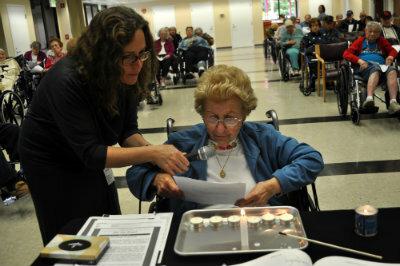
Holocaust and Heroism Remembrance Day
Last week, Jewish Home seniors gathered at the Schulman Activities Center for a special Yom Ha'Shoah— or in English, Holocaust and Heroism Remembrance Day— program.
Skirball Director of Spiritual Life, Grancell Village Rabbi Karen Bender led the seniors in prayer and song.
During the program, six seniors came to the front of the room to light six candles, each candle representing one million of the six million Jews who died in the Holocaust.
Several survivors were in attendance. Some shared poetry, sang songs, and spoke about their experiences.
Rabbi Bender emphasized the importance of Yom Ha'Shoah is remembering. "Each year on this special day, we must remember the victims and the heroes of this catastrophe and we must make sure that a tragedy like this will never happen again."
May
4
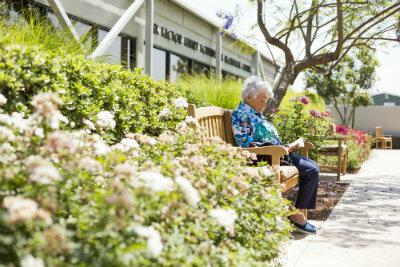
Residential Care at the Jewish Home
Personal, professional care in a beautiful, serene setting. That’s what you and your loved ones can expect from the Los Angeles Jewish Home’s in-residence care.
Residents at the Jewish Home enjoy shared or single rooms in one- and two-story buildings on our secure, park-like campuses in Reseda.
Seniors receiving residential care are capable of semi-independent living and mobility, and are mentally alert.
Our grounds feature sculptures, fountains, and intimate garden areas where residents meditate, read, or gather with friends and family.
Our dining rooms serve wonderful Kosher meals. We provide complete laundry and housekeeping services, so residents can enjoy musical programs, exercise classes (including T’ai Chi and yoga), art classes, and many more activities.
Lectures and movie screenings, clubs and social opportunities, easy access to the Levy-Kime Geriatric Community Clinic, plus regular transportation to off-campus shopping, entertainment, and outings enhance the enriching lifestyle at the Home.
For more about residential care, please contact Admissions Director Sato Artinian at 818.774.3303 or by email at [email protected].
The Jewish Home is now accepting applications for seniors seeking residential care. To learn about the admissions process or to submit an application, click here.
May
1
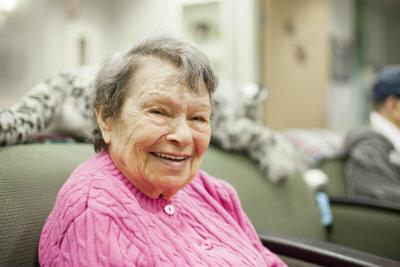
Person-Centered Care
We all want a better life for those living with memory loss. “Person-centered care” is an approach that guides caregivers and families in knowing and honoring the person first – before the disease. This approach aims to see the person with dementia as an individual, rather than focusing on their illness or on abilities they may have lost. It is based on the principle that all individuals, regardless of their disability, deserve to be treated with dignity and respect and can lead fulfilling and meaningful lives.
Person-centered care is the guiding principle of the Jewish Home’s Goldenberg•Ziman Special Care Center. This approach considers the whole person, taking into account each individual's unique qualities, abilities, interests, preferences and needs, instead of treating the person as a collection of symptoms and behaviors to be controlled.
All GZ staff members are involved in the residents’ care and are responsible for the “life happiness” of those in the Center. Families are an integral part of this process, helping the GZ staff learn life stories, personal likes and dislikes, working history, and special cues used to communicate. This information is incorporated into the care plan and helps the staff develop meaningful relationships with the individual.
At GZ, a variety of person-centered activities and techniques are evident in daily life. For example, reminiscence is facilitated with appropriate props and considers the importance of each individual’s reality. The GZ staff tries to ensure no task or aspect of care is placed higher than the experience of the individual. Routines and activities are designed so they are flexible for the person with dementia, or easily adapted according to individual’s wishes.
There are numerous benefits to a person-centered care approach. It has been shown that when people with dementia are involved in social activities and encouraged to become engaged in activities they find enjoyable, there is an improved quality of life, particularly in reducing challenging behaviors. Studies have also shown decreased agitation can be obtained in person-centered care programs if there is freedom of choice regarding daily activities scheduling. This can lead to decreased verbal agitation levels.
Person-centered care can also help in sustaining a good relationship between the caregiver and the person affected by dementia. This in turn can maintain the individual’s high level of psychological well-being and productive behaviors and reduce depression.
Research indicates when people with dementia are being provided with the opportunity of expressing themselves and their needs, they will maintain a positive sense of self. This can significantly reduce their feelings of grief, anxiety, anger and feeling like a burden to others. Respecting past interests and current capabilities can improve sleep during the night and daytime napping, as shown in person-centered care research programs.
Person-centered care can also be a benefit for the staff. It has been shown that this approach reduces caregivers' frustrations and saves money by reducing hospitalizations and the use of medications, but more importantly, it provides a better quality of life for persons with dementia and their loved ones.
May
1
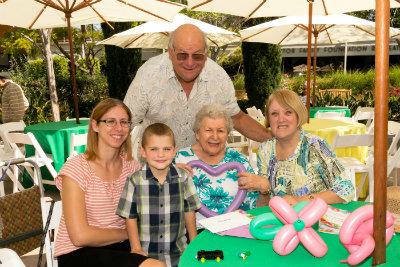
Celebrating our Special Mothers
This Sunday, May 8th, more than 1,000 friends and family members will attend the 22nd Annual World’s Largest Mother’s Day Celebration.
This heartwarming celebration of motherhood will honor the Home’s senior mothers, grandmothers, great-grandmothers, and even great-great-grandmothers who have given us so much. “Mother’s Day serves as a reminder of all the amazing ways the special women in our lives have nurtured, cared and loved us,” The Home’s CEO-President, Molly Forrest remarked. “On Sunday, we will recognize with gratitude the women who have always been there for us.”
“Mother’s Day is traditionally one of the Home’s most joyous, and well-attended, events of the year.” Board of Directors Chair, David L. Swartz observes. “This celebration is a direct result of the commitment and hard work of our Mother’s Day chair, Judy Friedman Rudzki, the generosity of our corporate and private sponsors, and the dedication of caring friends and supporters, whose effort makes this an exceptional day for our residents and Jewish Home family.”
Jewish Home seniors and their guests will enjoy a delicious brunch and a dynamic performance by the Skye Michaels Orchestra. Colorful clowns will juggle, mime, and bring balloon animals to life. After a day of fun, guests will be given a commemorative program and a framed photograph keepsake to cherish for years to come.
Tickets for adults (age 12 and older) are $25.00 each and children’s tickets (ages 5-11) are $12.00 each. There is no charge for Jewish Home residents and children under age 5.
For more information about the 22nd Annual World’s Largest Mother’s Day Celebration, please contact Denise Horowitz at [email protected] or (818) 774-3324.
Apr
12
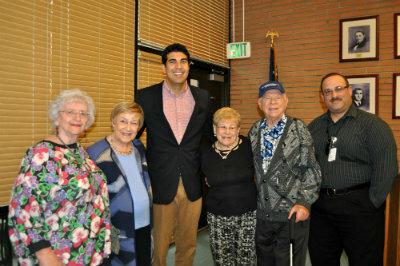
Assemblymember Matt Debabneh Speaks at Eisenberg Village
On the morning of Friday, April 8th, Assemblymember Matt Debabneh made his way to the Eisenberg Village’s Zuckerman Boardroom to speak to the Jewish Home’s seniors and staff about Assembly Bill 1319, also known as the Medically Needy Program Extension.
Eisenberg Village administrator Doug Tucker welcomed the crowd and gave a brief explanation of the bill. “Currently, the Medically Needy Only (MNO) program provides senior recipients with just $20 per month as a personal spending allowance. This $20 must cover over the counter drugs, clothing, shampoo and a variety of personal items such as hearing aid batteries and denture repairs. For the 12,000 individuals across the state that qualify for this welfare, $20 is simply not enough.”
Doug continued, “Last year, the Assemblymember Matt Debabneh partnered with the Home to help preserve the dignity of our MNO population and increase the amount of money these needy seniors receive. Matt did an incredible job pushing AB 1319 through the House of Representatives and on to the Senate. Unfortunately, the Bill was suspended once it reached the Senate’s budget committee last year. However, our champion, Matt Debabneh is here to discuss his plans to re-introduce the bill this year.”
Assemblymember Matt Debabneh then took the stage and pledged his commitment to the seniors of California. “Seniors are the backbone of our community. They are the reason we are able to live in such an incredible community. The jobs you’ve worked, the taxes you’ve payed, the families you’ve raised.. And now it’s time for us to do the same for you. The $20 MNO recipients are given each month is not enough. All of our seniors should be able to live in dignity. I’m going to keep fighting for you.”
After all was said and done, seniors and staff members enjoyed delicious refreshments and had the opportunity to speak with the Assemblymember.
Stay tuned to the Los Angeles Jewish Home blog to follow AB 1319’s journey through the House and Senate.
Apr
6

World Allergy Week 2016
World Allergy Week is an annual initiative of the World Allergy Organization (WAO). This year, World Allergy Week falls on April 4th-April 10th. During this week, WAO partners with its member societies to raise awareness of allergic disease and related disorders. WAO also advocates for the provision of training and resources in the diagnosis, management, and prevention of these diseases and asthma, which are rising in prevalence around the world.
While allergies affect people of all ages, they can have a large impact on the lives and health of seniors. Allergy symptoms, such as a congested nose, an irritated throat, and a dry mouth can be extremely dangerous to a senior who has pre-existing cardiovascular or lung problems. Pollens can also aggravate existing medical conditions such as heart disease and COPD. That is why allergies in the elderly should be treated as rapidly and aggressively as possible
Seniors with pollen allergy need to be particularly careful using over the counter or prescription medications for their symptoms. The anti-histamines that help minimize the effects of allergies are not recommended for a lot of seniors. That is because they can interact with other medications and increase blood pressure. In addition, the sedating quality of anti-histamines increase a senior’s risk of falling, and could cause a dangerous condition where the person cannot urinate. Other side effects include confusion, drowsiness, dry mouth and eyes, and dizziness. Rather than prescribing antihistamines for the seniors suffering from seasonal allergies, a doctor will often prescribe a nasal steroid or some form of topical medication.
The following are some simple tips for you to consider:
Use the air conditioner. Keeping the windows closed helps to prevent pollens and molds from entering the house.Don’t hang clothing or linens outside to dry. Instead, use the clothes dryer or hang them indoors to dry.Keep an eye on pollen levels and plan outings for days when pollen counts are projected to be the lowest. There are several free services that will also alert you when pollen counts reach high levels. They include The Weather Channel, The American Academy of Allergy Asthma and Immunology, and Pollen.com.Wear sunglasses when you are outside. That can prevent pollen and other seasonal irritants from getting in to your eyes. A hat also helps prevent it from getting in to your hair and working its way on to your hands and clothing.Wash your hands after being outdoors. And make sure to shower as soon as you come in from working or spending any significant amount of time outside. Throw the clothes you were wearing in to the laundry. That can help prevent pollen from being spread around your house.Many nutritionists believe that foods that help fight inflammation can help relieve some of the symptoms of allergies. Those include apples, walnuts, flax seed, ginger, leafy green vegetables and foods rich in vitamin C. However, as mentioned previously some people are allergic to these foods.
It is important to realize seniors often have multiple chronic health problems, and it can be hard for a doctor to separate a potential allergy from their ongoing diseases. A caregiver or family member who suspects that their elderly loved one may have allergies should bring their concerns to their loved one's doctor, and suggest to the doctor allergy testing or treatment.
Dr. Noah MarcoJewish Home Chief Medical Officer
Apr
1

A Passion for Learning and a Yearning to Care
The Jewish Home’s Annenberg School of Nursing (ASN) continues to provide an exceptional learning opportunity for those who are interested in helping others as a nurse assistant, home health aide, or vocational nurse. Since its inaugural Class of 2008, over 100 students have completed the 13-month, full-time Vocational Nurse (VN) program and begun fulfilling careers. As ASN prepares for the graduation of the Class of 2016 in July, and to welcome the Class of 2017 in September, Jewish Home e-Connections will present some of our graduates’ success stories. We hope they will inspire readers who may be considering a career in the field of nursing to take that step to change their lives, and the lives of others.
ASN alumni Susan Genova, Class of 2012, always had a passion for learning and was drawn to science and biology. Her lifelong goal was to study nursing; but her path was sidetracked a bit after she graduated from Emory University with an Associate’s Degree in Applied Science. Susan would go on to work on Wall Street as a Bank Stock Analyst’s Assistant doing research and as a Webmaster. “Most importantly,” she says, “I raised two children and now have two grandchildren. Becoming a nurse was always on my mind, but I couldn’t figure out my way back to school.”
Susan’s mother died unexpectedly in 2009. “For two years after her death, I could hear her voice telling me to go back to school.” The opportunity to attend ASN came along, and Susan took it. “I was nervous about going back to school at 52. My husband was very supportive and encouraged me to take the step forward. Marie Cordeiro, ASN’s Director, helped immensely. “Through her constant confidence in me I was able to draw on strength I did not know I had.” Susan studied diligently and committed to making school her top priority, which resulted in her graduating among the top in her class.
After passing the NCLEX-PN® exam in 2012, Susan worked as a LVN at the Home’s Joyce Eisenberg-Keefer Medical Center. “I was trying to figure out what was next for me. I started teaching Nursing Assistant classes at The Red Cross. Through this I became certified as a DSD – Director of Staff Development – and I knew that was the next right choice for me.” Shortly after completing her certification, Susan applied for the DSD position at the Home’s Eisenberg Village. She has been working in that capacity since August 2015.
“At the Annenberg School of Nursing, Susan took her studies seriously,” says ASN director Marie Cordeiro. “She was considerate of her classmates and truly cared about their success. During clinical rotations, Susan was eager to learn and showed great compassion with patients. Her successful career is a reflection of her commitment to nursing and helping others to thrive.”
Upon reflecting at her time at ASN, Susan shares what made the experience so beneficial in her nursing career. “The small class size encourages team work and camaraderie. ASN offers a variety of clinical sites not available to most VN programs. This exposure teaches you to be quick on your feet and quick in your mind. And when a position at the Jewish Home is available and an ASN graduate has the appropriate skills, you are able to gain experience in your field after graduation, which is critical at the beginning of your nursing career.” Congratulations to Susan Genova on discovering her path to a successful career in nursing. Your dedication to learning, team work, and providing excellence in care is greatly appreciated by the Jewish Home residents and staff, and the Annenberg School of Nursing is proud of you.
For information about the Jewish Home’s Annenberg School of Nursing, please contact Cindy Thomas, admissions coordinator, at [email protected] or (818) 757-4431, or visit ASN’s website at www.asn.edu.