8 Reasons Why Friendships Are So Important


8 Reasons Why Friendships Are So Important
Feb 7, 2018
Multiple studies have proven that having close friends is good for your health and well-being. Here are eight reasons why making and keeping friends is so beneficial.
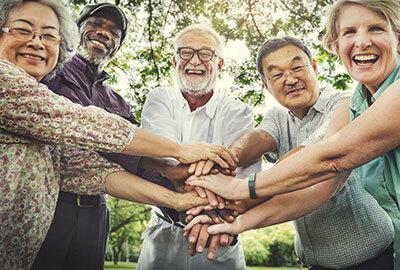
Friends make you—and others—happy. Happiness is contagious! A heart study demonstrated that people have a tendency to gather into happy or unhappy groups, and happiness appears to spread to those immediately inside the group and to people outside the group as well.- Friends help boost your immune system. Being socially active produces positive emotions, which may boost your body's immune system and reduce stress.
- Good friends are great listeners. Sometimes, you just want to get something off your chest. Who better to rant and rave to than a friend? Good friends listen but don't judge.
- Friends are honest. Being a good friend means that you are supportive, but also honest. Hard as it may be, friends can help you face the truth.
- Friends help you cope with grief. People who receive support from friends or family after a personal loss are better able to cope with their grief. The most effective forms of support are often the simplest: listening, offering sympathy and encouragement, and just being physically present. In contrast, feeling alone tends to worsen grief.
- Friends help you meet your fitness goals. Friends provide the encouragement and support you need to achieve your fitness goals, such as losing weight, quitting smoking, or eating a healthier diet.
- Friends give you self-confidence. We may doubt our decisions and abilities. Good friends stand by you and help you believe in yourself.
- Friends help you age more gracefully. A survey of people over age 60 shows that those who have close, healthy relationships with family and friends are more content as they grow older.
Spending time with friends is fun; it may also produce long-term physical and emotional health benefits. So keep your friends and make new ones. You can never have too many.
Recent Articles
Aug
5
Los Angeles Jewish Health Welcomes New Board Chair Michelle Rubin
For Michelle Rubin, helping Los Angeles Jewish Health flourish has been a lifelong pursuit. The great-grandniece of H. Lew Zuckerman, one of the founders of LAJH in 1912, and the daughter of Pam and Mark Rubin, among the organization’s most dedicated supporters over the last half century, Michelle grew up with LAJH as a central fixture of her childhood.“My grandparents established the Palm Springs Auxiliary; my parents helped start the Marilyn and Monty Hall Statesman’s Society; my mom was a board member; and my dad was a member of The Guardians, as are my brother and my nephew,” Michelle says. “Los Angeles Jewish Health is in my blood.”Today, Michelle is serving as the newly elevated chair of LAJH’s board of directors, a role that enables her to continue the family tradition of giving back to seniors in our community. The position builds on her decades of experience working to advance LAJH’s vital mission—first as a member of the young leadership program Tovim, then as chair of the in-residence board for both the Grancell Village and Eisenberg Village campuses, and most recently as chair of the board for the Brandman Centers for Senior Care (BCSC) PACE Program.“I know all of LAJH’s lines of business, which will help me as I collaborate with other board members and staff to expand the organization’s work and secure its financial future,” Michelle says. “I’ll be drawing on that knowledge and experience as I seek to achieve two primary goals: upholding our fiduciary commitment so LAJH can continue making a difference for seniors, and developing the pipeline of volunteers who are ready to step up and help lead this amazing organization.”Michelle RubinMichelle balances her charitable commitments to LAJH and other nonprofit organizations with a busy, full-time job as president of Regional Properties, Inc., a Beverly Hills-based real estate development company that she took over from her late father. She says she is proud to follow in his footsteps, both professionally and philanthropically.“My dad always said, ‘I build buildings for a living, but my philanthropy is for people,’ and that’s how I feel about LAJH,” she says. “It’s about the people—the residents and the staff, who come together to create the most extraordinary environment. So many seniors are alone, but at LAJH, they find community, and they’re able to thrive. It’s wonderful to be part of that and to know I’m doing what I can to help seniors stay safe and healthy, and make the most of every day.”Dale Surowitz, LAJH’s president and chief executive officer, says having Michelle as board chair will empower LAJH to reach new heights of success, serving more seniors and continuing to enhance its unparalleled quality of care.“Michelle’s intimate knowledge of our operations and incredible dedication to our work will be instrumental in helping LAJH extend its umbrella of care to cover growing numbers of seniors, today and for generations to come,” Dale says. “I am excited to partner with her in maximizing our impact.”As she dives into her work as board chair, Michelle says it is an honor to carry the torch of her parents’ legacy.“My mom and dad taught us by doing—never telling us where to give, or how much, just making clear that we needed to be invested in our community,” Michelle says. “I’m thrilled to be following their example and so grateful I’m in a position to support LAJH.”
Aug
5
Staff Appreciation Week: Caring for the Caregivers at LAJH
It takes a lot for Los Angeles Jewish Health to run smoothly each and every day. Central to the organization’s success is its talented and dedicated staff—the men and women who work tirelessly to provide residents the quality, compassionate care for which LAJH is widely renowned. In May, LAJH celebrated those employees during Staff Appreciation Week, giving the organization a chance to thank them for their incredible efforts and to express gratitude for their commitment to helping residents thrive.The theme of this year’s event was, “Excellence in Senior Care…the Magic Is YOU!” Throughout the week, staff came together to participate in activities including the “Magic Star Makers Employee Recognition,” “Cast Your Own Spell,” and “No Talent Required Variety Show.” They also enjoyed themed treats and meals such as “enchanted donuts,” “spellbinding smoothies,” “magical morning breakfast,” and a “power-up abraca-BBQ cookout.”“Our CEO, Dale Surowitz, inspired the theme; he’s always talking about how our staff are the ‘secret sauce’ or the ‘magic ingredient’ that powers LAJH,” says Chief Human Resources Officer Alyssa Alderman. “It’s absolutely true, so it was a perfect way to frame the celebration.”It was Shelly Ryan, LAJH’s first chief human resources officer, who launched Staff Appreciation Week (originally known as National Nursing Home Week) years ago in an effort to ensure that all employees received recognition for their heroic contributions.“We used to try and observe the different healthcare weeks individually as they happened: National Nurses Week, Administrative Professionals’ Day, National Physical Therapy Week, etc. It was a lot to keep track of, and we decided to streamline it and observe National Nursing Home Week so everyone could feel included, and appreciated, all at once!” Ryan says.As the years passed, LAJH evolved beyond its nursing home origins. The organization expanded its services to become a comprehensive healthcare provider serving the entire community. In recognition of this change, Sharon Ginchansky, who became CHRO after Ryan, rebranded National Nursing Home Week as Staff Appreciation Week in 2013—and the rest, as they say, is history. It continued to grow in number of days celebrated and more events during different shifts.“Staff Appreciation Week was a big hit, and in 2017, Alyssa took over (from Sharon),” Ryan says. “She’s been a champion for LAJH staff since I hired her in 2008 and has elevated Staff Appreciation Week into the extraordinary environment of fun and celebration that it is today.”The celebration is well-deserved. Every member of the LAJH team contributes meaningfully to enhancing the lives of older adults. Whether providing direct care, supporting operations behind the scenes, welcoming families, preparing meals, maintaining the campuses, or offering a kind word during difficult moments, staff members help create the compassionate environment that defines Los Angeles Jewish Health.“Our staff are so incredibly dedicated to their work and to the population they serve,” Alderman says. “Across the board—from our nurses and social workers to the behind-the-scenes folks who do the laundry, the billing, and the fundraising—staff members treat every senior like they would their most cherished family member, making certain they get the best quality of care. Our staff members live and breathe our mission; it’s truly palpable when you come onto our campuses.”For Alderman, what makes Staff Appreciation Week wonderful is watching people who give so much of themselves each day receive some of that same care in return.“Taking care of the elderly can be a high-stress job,” she says. “To see our staff be able to bask in the glow of love and appreciation from LAJH leadership, to see the joy in their faces as they realize how much gratitude we have for them, is really moving. There’s no better way to say it: LAJH staff are simply the best (and truly magical)!”Click here to see more photos from Staff Appreciation Week
Aug
3
L.A. Business Leader and Philanthropist Michelle Rubin Elevated to Chair of Los Angeles Jewish Health Board of Directors
(RESEDA, CA – July 23, 2026) The Los Angeles Jewish Health board of directors has elected prominent real estate executive Michelle Rubin as chair. Rubin, president of Beverly Hills-based Regional Properties, Inc., will serve a two-year term helping set the direction for LAJH, Los Angeles’ largest nonprofit, single-source provider of comprehensive senior healthcare services.Rubin is the great-grandniece of H. Lew Zuckerman, one of the founders of LAJH in 1912, and the daughter of Pam and Mark Rubin, whose lifetime of service to the organization—as board members and advocates—ranks them among its most dedicated supporters.“Investing both time and resources in LAJH is a family tradition: My grandparents established the Palm Springs Auxiliary; my parents helped start the Marilyn and Monty Hall Statesman’s Society; my mom was a board member; and my dad was a member of The Guardians, as are my brother and my nephew,” Rubin said, referring to a number of high-impact LAJH support groups. “Los Angeles Jewish Health is in my blood.”For decades, Rubin has been an influential figure at LAJH in her own right, first as a member of the young leadership program Tovim, then as chair of the organization’s in-residence board for the Grancell Village and Eisenberg Village campuses, and most recently as chair of the board for the Brandman Centers for Senior Care (BCSC) PACE Program. In her new position, she will play an instrumental role in advancing LAJH’s mission, overseeing its financial stewardship, and cultivating a pipeline of volunteer leaders dedicated to ensuring its long-term future.Michelle Rubin“LAJH is an incredible community that upholds the Fifth Commandment—honor your father and mother—by providing exceptional quality care,” Rubin said. “As board chair, it is my goal to carry that legacy forward so our seniors can continue to be safe, healthy, and thriving.”Rubin brings a wealth of corporate and philanthropic experience to her tenure as board chair. Leveraging her skills and knowledge, noted LAJH’s President and CEO Dale Surowitz, will position LAJH for continued success.“Michelle Rubin is not only familiar with every one of our lines of business at LAJH; she is also an expert in serving as a fiduciary for companies and not-for-profit organizations alike,” Surowitz said. “Her commitment to growing LAJH’s capacity for meeting seniors’ needs, and to strengthening the social fabric of our city more broadly, will make her a tremendous board chair. I am excited to partner with her on behalf of the thousands of elderly men and women we serve.”