What is a Geriatrician?

Connections to Care Mobile Hero
Home / News & Events / Newsletter

What is a Geriatrician?

May 31, 2017

If you have a senior loved one in your life or are a senior yourself, you’re probably familiar with the word geriatrician. But in reality do you know what this term actually means?

A geriatrician is a fully trained physician specializing in the diagnosis, treatment, and care of seniors. In most cases, geriatricians are primary care physicians, board-certified in internal or family medicine. Before becoming a geriatrician, most complete a one-year, post-residency fellowship in the field of geriatrics. Geriatrics is the branch of medicine catering to older adults. Once the fellowship is completed, the geriatrician is ready to perform his or her primary role – enhancing the quality of life for seniors as they age. However, those physicians who went into the field prior to the development of formal training programs, had the ability to take a written test that demonstrated their knowledge in the field and get certified as a geriatrician.
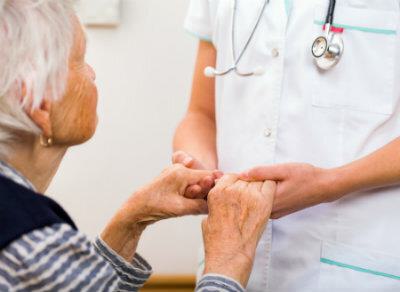

Geriatricians play a major role in a senior's health and well-being, providing diagnosis and treatment to patients with complicated medical conditions. Seniors with age-related illnesses, disabilities, and/or prolonged use of prescription medication can greatly benefit from the carefully crafted care plans geriatricians create.

These specialists usually start with a complete assessment of each patient's physical, psychological, cognitive, and social function. Once the doctor is familiar with a senior’s health profile, he or she work closely with the entire care team to develop a comprehensive plan of care.

Geriatricians are ready and willing to provide their patients with information and insight to make tough decisions easier to navigate. They can also help to take the load off of family caregivers who are struggling with caring for a senior loved one at home. With a quick evaluation of the senior’s living space, geriatricians propose small modifications to make home life easier and safer.

Many experienced geriatricians excel in providing key suggestions to continuously improve the quality of life for seniors.

At the Los Angeles Jewish Home, chief medical officer Dr. Noah Marco leads a team of noted geriatricians who provide award-winning services to seniors on site. “Many in the field consider the Jewish Home as one of the birthplaces of Geriatric Medicine,” says Dr. Marco. “When UCLA established the Multicampus Program in Geriatric Medicine and Gerontology in 1979, it affiliated with the Los Angeles Jewish Home as a place for its doctors to get their experience. We are fortunate that several of our doctors graduated from that program.”

If you or a senior you know are interested in healthy aging or looking to receive life-enhancing care, consider making an appointment with a geriatrician. Call the Home’s convenient, toll-free Connections to Care hotline 855.227.3745, or visit the American Geriatrics Society site and use the Find a Geriatrics Healthcare Professional tool to find a geriatrician near you.

Sign up for the Los Angeles Jewish Health newsletter, Connections.

Recent Articles

Feb 11

Major Changes in the Tax Law This Year: What It Means for You, Your Taxes, and Your Legacy

Read More
Feb 4

Los Angeles Jewish Health Pays Tribute to Martin Luther King, Jr. and Reflects on His Powerful Legacy

A shared focus on the pursuit of justice made the late Dr. Martin Luther King, Jr. and his contemporaries in the American Jewish community natural allies. This past January, Los Angeles Jewish Health honored their historic collaboration with a special Martin Luther King, Jr. Day event that brought together a diverse audience to celebrate Dr. King and help carry his legacy forward.Overseen by Rabbi Karen Bender, LAJH’s chief mission officer, the gathering featured timeless music blending Jewish songs and themes with gospel sounds rooted in the African American tradition. The program was led by Hazan Mike Stein, who served as cantor of Temple Aliyah—now HaMakom—in West Hills for more than two decades and included contributions from Cantor Jenni Asher, HaMakom’s current cantor; Broadway actress Deborah Sharpe-Taylor; singer Fumani Thomas-Schwartz; pianist David Cohen; and numerous others.“Our goal was to present a fusion of music and ideas about the melding of the two cultures, Jewish and African American,” Stein says. “We sang a song I wrote with Deborah called ‘Shalom, Shalom’; ‘Wade in the Water,’ a traditional African American spiritual that was combined with ‘Mi Chamocha’; ‘We Shall Overcome’; and ‘When the Rain Comes Down,’ which speaks to the universal struggles we all go through, no matter our faith or background. Rabbi Bender also offered a beautiful d’var Torah.”The group performs music which blends songs and themes with gospel sounds rooted in the African American tradition. Rabbi Bender’s words of wisdom helped ground the emotionally uplifting musical tribute, emphasizing how the values of Dr. King align completely with Jewish values.“Our resident community at LAJH intuits the profundity of a message that relates to the principles of justice, equality, and loving-kindness,” she said.A highlight of the event was Sharpe-Taylor’s performance as Harriet Tubman. She offered a first-person portrayal of the iconoclastic activist and brought to life her role in the Underground Railroad.“The residents loved Deborah’s reenactment. She tried to embody Harriet, talking about her life, missing her husband, and bringing people to freedom,” Asher says. “When she was finished, Rabbi Bender got up and said, ‘I almost feel as if I met Harriet Tubman today!’”During the program, Asher, the first Black female cantor to be ordained in the United States, offered insights into her own experience as a Jew of color.“It’s amazing to be visible: I have people come up to me all the time to say they’ve never seen a Black or even a female cantor,” she says. “But Jews and Judaism have moved so far in terms of diversity, and I think it’s impactful for seniors to witness this evolution for themselves. The residents of Los Angeles Jewish Health were so warm and happy to see me, which was wonderful.”Also on hand for the event were William “Mickey” Stevenson and his wife, Michelle. Mickey, a legendary producer at Motown Records and one of the principal architects of the “Motown Sound,” talked about the outstanding partnership at the label between Black artists and its executives, some of whom were Jewish.Cantor Stein says the program was particularly resonant for many of the LAJH residents in the audience.“A lot of the seniors remember the ‘60s and were politically active, some of them playing important roles in advancing civil rights in their local communities,” he says. “In fact, my wife, Kelley, an LAJH resident, was actually at the “I Have a Dream” speech march! When Rabbi Bender talked about how Black and Jewish people are connected by traditions that encompass both being slaves and being free, you could see people nodding along. It’s a powerful link that gives us all common ground to stand up for what’s right.”Cantor Jenni Asher Deborah Sharpe-Taylor as Harriet TubmanWilliam “Mickey” Stevenson 
Read More
Feb 4

Embracing Life at Los Angeles Jewish Health Without Missing a Beat

Los Angeles Jewish Health rehabilitation patient Thomas Flynn has led a life full of success and accomplishment. But his most recent achievement may well be his greatest yet: surviving and thriving nearly one year after a high-stakes heart transplant.Tom’s health had been on a steady downward trajectory as doctors tried everything possible to address his ventricular tachycardia, a heart rhythm disorder that disrupted the electrical signals necessary for smooth cardiac functioning. After years of treatment and despite utilizing the latest in state-of-the-art medical advances (including surgical ablations and the placement of an implantable cardioverter defibrillator), doctors told him he had reached the end of the road.“I was basically out of options except for a transplant, and at 73 I was older than usual for that kind of procedure,” Tom says. “But I knew I wouldn’t be able to survive long term without it—I had been in the hospital 266 out of 365 days that year, which gives you an indication of how dire my circumstances were.”But Tom was otherwise healthy, without any comorbidities, and his doctors at Cedars-Sinai put him on the transplant list. Their decision saved his life.“It was a long shot, but they took a chance on me. I was the oldest person at Cedars-Sinai to get a transplant last year, and through what feels like a series of miracles, here I am today having turned 74,” Tom says.Those miracles include his medical team at Cedars-Sinai, a donor heart that matched his profile (“I think of that person every single day”), and the rehabilitation care he is receiving at LAJH.“I’ve been in JEK [the Joyce Eisenberg-Keefer Medical Center] for the past six months, and when I first got here, I was hooked up to so many machines that I couldn’t even leave my room for three months,” Tom recalls. “But the team at LAJH is amazing, from the doctors to the senior nursing staff, all the way to the certified nursing assistants. Now, I’m up and walking around, doing things I never thought I’d have the chance to do again!”Thomas FlynnBesides receiving rigorous occupational and physical therapy, Tom is an active member of the resident community.“The therapeutic activities here are incredible. The staff does so much to make sure our neural networks are firing and cognitive synapses are working—hosting discussion groups and learning activities that have residents reaching deep. It’s so gratifying,” he says.The intellectual stimulation has been critically important to Tom, who spent his career in both government and industry working on big ideas to strengthen the fabric of American society.After graduating from Columbia University and Santa Clara University School of Law, he joined the administration of Governor Jerry Brown in Sacramento, where he worked to open California up to international investment and supported the development of Silicon Valley. From there, he pivoted to the private sector, helping bring the first generation of electricity-generating windmills to Palm Springs and facilitating the acquisition of agricultural technology from Israel. Tom’s multifaceted career also included stints as chief executive officer of one of the nation’s premier public opinion and social research firms—where he managed Times/CNN polling for the 1992 and 1996 presidential election cycles—and time as a government consultant collaborating on impactful studies for the Department of Defense and other agencies.He and his wife, Cari Beauchamp, a prominent writer and journalist, split their time between Los Angeles, Washington, D.C., and New York, making their marks professionally while also raising their two sons, Jake and Teo. Cari passed away from cancer in 2023.At LAJH, in addition to recovering his physical stamina and sharpening his mental acuity, Tom has fostered new friendships with other JEK residents.“People are so smart and have such fascinating life stories. All of us are here because of medical infirmities, but we still have so much to offer in terms of our various skills and talents,” he says. “The entire LAJH community keeps me active and stimulated, and I’m so grateful every single day.” 
Read More