Time to Celebrate the Caregivers in Your Life!

Time to Celebrate the Caregivers in Your Life!
Nov 7, 2017
November is National Family Caregivers Month. It's a time for us all to thank the caregivers who do so much.
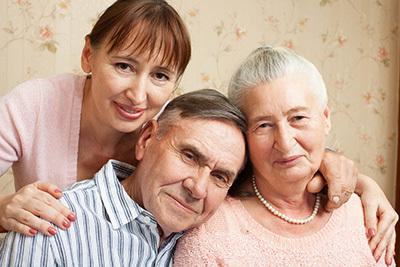
Did you know this about caregivers?
- Today, over 90 million Americans are caregivers for their loved ones. Many provide care 24-hours a day, 7-days a week.
- The average family caregiver is a working mother of school-aged children.
- Up to 70% of the time, the family caregiver—not the patient—manages medications.
- Six out of 10 family caregivers work full- or part-time. Most say they have to cut back on working hours, take a leave of absence, or quit their job entirely to give care.
Although caregiving can be a rewarding experience, it can lead to stress, poor health, and burnout. Here are a few ways you can show your appreciation to the caregivers in your lives:
- Tell them how much you appreciate all their efforts. And tell them you love them
- Encourage them to make time for themselves in order to protect their own health
- Send them a card or bouquet of flowers
- Go online and purchase a gift card to a bookstore, coffee shop, or museum
- Who doesn't like a nice meal? Send them a gift certificate for their favorite restaurant
- Offer a bit of respite care for your busy caregivers. Volunteer a few hours of your time a week to help them out—and to allow them some free time for themselves
These and other actions can help ensure that the caregivers in your life maintain their strength, energy, stamina, and positive attitude.
So, this November, let's all take the time to show our appreciation for the caregivers in our lives—the ones who do so much to improve our quality of life.
Recent Articles
Oct
16
Los Angeles Jewish Health’s Annenberg School of Nursing Graduates First Nursing Class in Partnership With AltaMed
Last year, Los Angeles Jewish Health’s renowned Annenberg School of Nursing (ASN) announced a partnership with AltaMed, one of the country’s largest community health networks, to address a statewide shortage of highly skilled nurses. The two organizations launched ASN-LA, a new ASN outpost located on the campus of AltaMed’s City of Commerce headquarters, increasing ASN’s capacity to train additional nursing professionals.In September, the collaboration bore its first fruit: ASN-LA graduated its inaugural class of licensed vocational nurses (LVNs). Twenty-two graduating students received their diplomas as an audience of 540 family members, friends, and supporters cheered them on.“The size of the crowd said it all: People were so motivated to come cheer on our graduates, most of whom were the first in their families to reach this level of academic achievement,” said Amandeep Kaur, ASN’s executive director. “Parents, friends, and other loved ones were incredibly proud, and everyone was crying tears of joy.”Students at ASN-LA are AltaMed employees; each of them receives a $12,000 tuition scholarship from the AltaMed Foundation to help reduce financial barriers to nursing education. The program’s flexible structure allows them to continue working while they study, meaning they are able to advance their education without putting their lives, or careers, on hold.“The resources these students receive are really a game changer: getting tuition assistance and drawing a salary dramatically increases the program’s accessibility,” Kaur said. “It opens our students up to new worlds of possibility.”Those students include Margarita “Maggie” Chavez, who this year graduated cum laude and won the prestigious Florence Nightingale Award and the Best Clinical Award. Chavez spoke movingly at the graduation ceremony about the significance of ASN-LA’s support.“I’ve always known how much I love nursing, but becoming an LVN once felt completely out of reach financially,” Chavez recalled. “I truly cannot express how grateful I am to the Annenberg School of Nursing and AltaMed for giving me an opportunity I once thought I couldn’t even afford to dream about.”Class valedictorian Giselle Cabanas-Morfin also spoke at the event.“Thank you to AltaMed, Annenberg School of Nursing, and LAJHealth, led by CEO Dale Surowitz, for creating an opportunity that changed the lives of so many people in this room,” Cabanas-Morfin said. “Through your partnership and leadership, we are standing here today. You didn’t just invest in students, you invested in their futures, their families, and their dreams.”LAJH President and Chief Executive Officer Dale Surowitz attended the ceremony and offered his own words of gratitude and encouragement to the graduates, ASN-LA staff, and assembled guests.“To our staff, thank you for helping nurture and develop these students as they built new skills and prepared for careers serving their community. And, to those of you in the audience, thank you for being there to give these emerging professionals the love and support that sustained them through the hard work of their training,” Surowitz said. “To our graduates, you inspired us by committing to this path and showing us you could walk the walk. As you go forward, remember that you have the power to make anything possible.”
Oct
16
Los Angeles Jewish Health Quality Initiative Sets High Bar for Diabetes Care
In August 2026, JAMA Internal Medicine, a peer-reviewed journal from the American Medical Association, published an article revealing that most older adults with Type 2 diabetes did not have their medications adjusted when their blood sugar levels were outside the American Diabetes Association (ADA)-recommended target. At Los Angeles Jewish Health, the numbers tell a different story.Every year, LAJH undertakes an initiative to improve the care of residents in a specific area or discipline. LAJH does this not just to meet the current care standards, but in most cases to exceed them. Aware that many seniors nationally are not receiving appropriate diabetes-related care, the medical and administrative staff at LAJH decided to focus their most recent quality initiative on ensuring that LAJH residents with diabetes benefit from the most up-to-date and comprehensive care protocols possible.“The medical literature shows that, especially for older adults living in facilities, inadequate diabetes care is an incredibly common problem,” says LAJH’s Chief Medical Officer, Noah Marco, MD, CMD. “Here at Los Angeles Jewish Health, we set specific, targeted goals, based on the standard of care, to meet the full scope of needs for our residents with diabetes.”Those goals met with stunning results.“We set an ambitious goal for ourselves that, 90% of the time, our clinicians would order blood tests to monitor diabetes control on the proper schedule—and we are at 98.6%,” Dr. Marco says. “We also aimed to ensure that our diabetic patients receive the right insulin therapy, setting a 90% target, and we’re actually at 100%.”One of the key differentiating factors at LAJH is the integration of pharmacy more directly into patient care.“A major advantage for us at Los Angeles Jewish Health is that we have resources many other facilities don’t have, including pharmacists trained in the care of this population, as well as a pharmacy residency program that helps prepare the next generation of pharmacy professionals,” Dr. Marco says. “Getting our pharmacists involved brings an added expertise in terms of medication management, and having them work shoulder-to-shoulder with physicians and nurses to provide state-of-the-art care is a gamechanger.”LAJH Director of Pharmacy Aida Oganesyan agrees.“Taking an interdisciplinary perspective, in which we bring our pharmacists together with our providers and nursing staff, enables us to collaborate and manage care in a very patient-centered way,” Dr. Oganesyan says. “At LAJH, we consider each and every patient’s individual priorities and goals, recognizing we have a responsibility to manage their diabetes so they can live full and active lives.”The diabetes quality initiative, which began last fall, took place over the course of an entire year. Now that the initiative is complete, and the data reported, Dr. Marco says it provides another window into what makes LAJH stand out.“When you have an amazing team like ours come together, you can do incredible things for the residents we serve,” he notes. “The diabetes quality initiative provides a great example of how LAJH is providing truly exceptional care.”
Aug
5
Los Angeles Jewish Health Welcomes New Board Chair Michelle Rubin
For Michelle Rubin, helping Los Angeles Jewish Health flourish has been a lifelong pursuit. The great-grandniece of H. Lew Zuckerman, one of the founders of LAJH in 1912, and the daughter of Pam and Mark Rubin, among the organization’s most dedicated supporters over the last half century, Michelle grew up with LAJH as a central fixture of her childhood.“My grandparents established the Palm Springs Auxiliary; my parents helped start the Marilyn and Monty Hall Statesman’s Society; my mom was a board member; and my dad was a member of The Guardians, as are my brother and my nephew,” Michelle says. “Los Angeles Jewish Health is in my blood.”Today, Michelle is serving as the newly elevated chair of LAJH’s board of directors, a role that enables her to continue the family tradition of giving back to seniors in our community. The position builds on her decades of experience working to advance LAJH’s vital mission—first as a member of the young leadership program Tovim, then as chair of the in-residence board for both the Grancell Village and Eisenberg Village campuses, and most recently as chair of the board for the Brandman Centers for Senior Care (BCSC) PACE Program.“I know all of LAJH’s lines of business, which will help me as I collaborate with other board members and staff to expand the organization’s work and secure its financial future,” Michelle says. “I’ll be drawing on that knowledge and experience as I seek to achieve two primary goals: upholding our fiduciary commitment so LAJH can continue making a difference for seniors, and developing the pipeline of volunteers who are ready to step up and help lead this amazing organization.”Michelle RubinMichelle balances her charitable commitments to LAJH and other nonprofit organizations with a busy, full-time job as president of Regional Properties, Inc., a Beverly Hills-based real estate development company that she took over from her late father. She says she is proud to follow in his footsteps, both professionally and philanthropically.“My dad always said, ‘I build buildings for a living, but my philanthropy is for people,’ and that’s how I feel about LAJH,” she says. “It’s about the people—the residents and the staff, who come together to create the most extraordinary environment. So many seniors are alone, but at LAJH, they find community, and they’re able to thrive. It’s wonderful to be part of that and to know I’m doing what I can to help seniors stay safe and healthy, and make the most of every day.”Dale Surowitz, LAJH’s president and chief executive officer, says having Michelle as board chair will empower LAJH to reach new heights of success, serving more seniors and continuing to enhance its unparalleled quality of care.“Michelle’s intimate knowledge of our operations and incredible dedication to our work will be instrumental in helping LAJH extend its umbrella of care to cover growing numbers of seniors, today and for generations to come,” Dale says. “I am excited to partner with her in maximizing our impact.”As she dives into her work as board chair, Michelle says it is an honor to carry the torch of her parents’ legacy.“My mom and dad taught us by doing—never telling us where to give, or how much, just making clear that we needed to be invested in our community,” Michelle says. “I’m thrilled to be following their example and so grateful I’m in a position to support LAJH.”