LAJHealth Awarded 28 Million From California DHCS

Connections to Care Mobile Hero
Home / News & Events / Newsletter

Los Angeles Jewish Health Awarded $28 Million From California Department of Health Care Services

Jun 3, 2025

Los Angeles Jewish Health (LAJH) has long worked in close partnership with the state of California in helping to set the standard for comprehensive senior care. This spring, California Governor Gavin Newsom and the California Department of Health Care Services (DHCS) announced an extension of this work by awarding LAJH $28 million to support the expansion of inpatient behavioral health services.

The grant is funded through Proposition 1, a bond initiative passed by voters in 2024 to establish the state’s Behavioral Health Continuum Infrastructure Program (BHCIP). The award to LAJH is a vital step in addressing California’s growing senior behavioral health crisis at a time of intensifying need: California’ senior population is projected to double by 2040, and with it, the number of older adults experiencing behavioral health challenges (particularly those who are low-income, medically complex, or socially isolated) is rising sharply.

This funding will support the expansion of inpatient behavioral health services for seniors

“This grant is a transformational investment in improving the mental health of our community’s seniors, empowering us to expand access to high-quality, compassionate inpatient care for seniors in acute psychiatric distress,” said LAJH President and CEO Dale Surowitz. “We are tremendously proud of our past successes meeting seniors’ most critical healthcare needs, and we look forward to extending that track record of achievement in ways that will strengthen the fabric of our entire community.”

Governor Newsom underscored the importance of Proposition 1 in his remarks announcing the awards.

“Californians demanded swift action to address our state’s behavioral health crisis when they voted for Prop 1 in March 2024…and we’re delivering our biggest win yet,” he said. “Whether it’s crisis stabilization, inpatient services, or long-term treatment, we’re ensuring that individuals can access the right care at the right time.”

This funding is part of California’s broader strategy to modernize the behavioral health system—increasing transparency, broadening access, and building the infrastructure necessary to provide a full continuum of care for individuals living with mental illness and substance use disorders. 

Through Proposition 1 and BHCIP, the state aims to create more than 6,800 new residential treatment beds and 26,700 outpatient treatment slots, addressing urgent gaps in care across every region of California.

“Our seniors require the very best mental health care possible,” Dale said, “and this new grant helps ensure we will continue to deliver the care and compassion they deserve.”
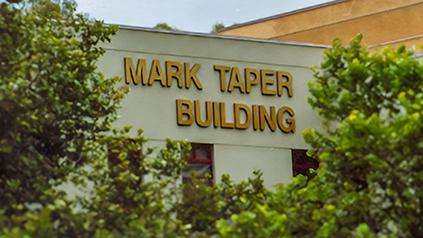
The expansion will take place in the Mark Taper Building on the Grancell Village campus

Sign up for the Los Angeles Jewish Health newsletter, Connections.

Recent Articles

Feb 12

3rd Annual LAJH Classic & Exotic Car Show

Read More
Feb 11

Major Changes in the Tax Law This Year: What It Means for You, Your Taxes, and Your Legacy

Read More
Feb 4

Los Angeles Jewish Health Pays Tribute to Martin Luther King, Jr. and Reflects on His Powerful Legacy

A shared focus on the pursuit of justice made the late Dr. Martin Luther King, Jr. and his contemporaries in the American Jewish community natural allies. This past January, Los Angeles Jewish Health honored their historic collaboration with a special Martin Luther King, Jr. Day event that brought together a diverse audience to celebrate Dr. King and help carry his legacy forward.Overseen by Rabbi Karen Bender, LAJH’s chief mission officer, the gathering featured timeless music blending Jewish songs and themes with gospel sounds rooted in the African American tradition. The program was led by Hazan Mike Stein, who served as cantor of Temple Aliyah—now HaMakom—in West Hills for more than two decades and included contributions from Cantor Jenni Asher, HaMakom’s current cantor; Broadway actress Deborah Sharpe-Taylor; singer Fumani Thomas-Schwartz; pianist David Cohen; and numerous others.“Our goal was to present a fusion of music and ideas about the melding of the two cultures, Jewish and African American,” Stein says. “We sang a song I wrote with Deborah called ‘Shalom, Shalom’; ‘Wade in the Water,’ a traditional African American spiritual that was combined with ‘Mi Chamocha’; ‘We Shall Overcome’; and ‘When the Rain Comes Down,’ which speaks to the universal struggles we all go through, no matter our faith or background. Rabbi Bender also offered a beautiful d’var Torah.”The group performs music which blends songs and themes with gospel sounds rooted in the African American tradition. Rabbi Bender’s words of wisdom helped ground the emotionally uplifting musical tribute, emphasizing how the values of Dr. King align completely with Jewish values.“Our resident community at LAJH intuits the profundity of a message that relates to the principles of justice, equality, and loving-kindness,” she said.A highlight of the event was Sharpe-Taylor’s performance as Harriet Tubman. She offered a first-person portrayal of the iconoclastic activist and brought to life her role in the Underground Railroad.“The residents loved Deborah’s reenactment. She tried to embody Harriet, talking about her life, missing her husband, and bringing people to freedom,” Asher says. “When she was finished, Rabbi Bender got up and said, ‘I almost feel as if I met Harriet Tubman today!’”During the program, Asher, the first Black female cantor to be ordained in the United States, offered insights into her own experience as a Jew of color.“It’s amazing to be visible: I have people come up to me all the time to say they’ve never seen a Black or even a female cantor,” she says. “But Jews and Judaism have moved so far in terms of diversity, and I think it’s impactful for seniors to witness this evolution for themselves. The residents of Los Angeles Jewish Health were so warm and happy to see me, which was wonderful.”Also on hand for the event were William “Mickey” Stevenson and his wife, Michelle. Mickey, a legendary producer at Motown Records and one of the principal architects of the “Motown Sound,” talked about the outstanding partnership at the label between Black artists and its executives, some of whom were Jewish.Cantor Stein says the program was particularly resonant for many of the LAJH residents in the audience.“A lot of the seniors remember the ‘60s and were politically active, some of them playing important roles in advancing civil rights in their local communities,” he says. “In fact, my wife, Kelley, an LAJH resident, was actually at the “I Have a Dream” speech march! When Rabbi Bender talked about how Black and Jewish people are connected by traditions that encompass both being slaves and being free, you could see people nodding along. It’s a powerful link that gives us all common ground to stand up for what’s right.”Cantor Jenni Asher Deborah Sharpe-Taylor as Harriet TubmanWilliam “Mickey” Stevenson 
Read More