Crafting a Care Plan with a Senior Loved One

Connections to Care Mobile Hero
Home / News & Events / Newsletter

Crafting a Care Plan with a Senior Loved One

Dec 2, 2016

For many aging adults and their loved ones, discussing plans for future care can be a sensitive topic. Jewish Home Chief Medical Officer Dr. Noah Marco shares how important it is to have the discussion and suggests a few ways families can ease into the conversation.
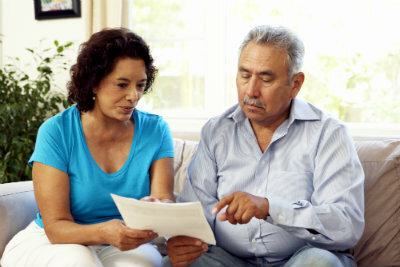

While nearly 90% of American seniors over the age of 65 plan to live independently for as long as possible, many find illness and other life events can greatly affect a senior’s desire and ability to live safely on their own.

Aging adults might experience difficulty completing household chores, running errands, and even taking care of their personal needs. For many, the humbling experience of admitting they need help with daily activities can become a source of embarrassment or anxiety. Therefore, they tend not to express to others the challenges they are having.

Often, family and friends are the first to trigger the discussion. That is why it is important for family member to watch for changes in their loved one's appearance, behavior, and physical ability. An example would be the seniors leaving the stove on and burning a pot.

A shift in the aging adult’s aptitude to complete everyday tasks can signal the opportune time to discuss plans for the future. Being proactive in partnering with the senior to select the right care plan can save family and friends from making difficult decision in a moment of crisis later on.

If the senior is capable, he/she should be as involved as possible in the decision making. During the discussion, loved ones should actively listen and be respectful of the senior’s preferences, concerns, and decisions. Family members can start the conversation by asking their loved one to share their thoughts, feelings, and opinions on creating a plan for the future.

A great way to stimulate a meaningful discussion is to ask, "If something happened that would mean you could no longer live in your home safely, what would you want to do?" Your follow up questions and answers should then be based on how the seniors responds. I often supplement these discussions with the phrase, "I am wishing for the best (that you can always stay in your home), but I think we also need to plan for the worse (you having to leave your home, or have someone care for you in your home)."

Ideally, this is not a talk that occurs just once. Care planning works best as an ongoing conversation for seniors and their loved ones. Getting input from a trusted medical professional is advisable. The senior’s doctor(s) can provide insight and offer expert advice tailored to each senior's situation.

Although the discussion can be a lengthy and challenging experience, it is important to remember all parties involved are working toward creating a future where the senior is safe, happy, and healthy.

To connect with the Jewish Home’s expert staff and learn about the full continuum of quality senior care, call our toll-free Connections to Care hotline: 855.227.3745 or visit our website.

Sign up for the Los Angeles Jewish Health newsletter, Connections.

Recent Articles

Jan 7

Illuminating Celebration and Pride: Chanukah at Los Angeles Jewish Health

Each year, Chanukah invites us to look back at the courage of the Maccabees, a small band that fought not only for survival, but for the right to live openly and proudly as Jews. Their story reminds us that Jewish pride is not loud or boastful; it is steady, resilient, and deeply rooted in identity and purpose. In every generation, Chanukah lifts that message like a flame, and this year at Los Angeles Jewish Health, that flame of pride glowed especially bright.So many of our residents grew up in times and places where Jewish identity was something to be quiet about or carefully held inside. Not only in countries in a state of danger or upheaval, but even in American cities, in neighborhoods, clubs, parks, and workplaces, where subtle messages made it clear that being Jewish was something to soften or conceal. And yet, they persevered. They built families, communities, and lives of meaning, carrying their Judaism forward with quiet strength.Here, at LAJH, no one needs to tuck that part of themselves away. Being Jewish is safe. Indeed, here pride is not resisted; it is cherished. Our residents gather to celebrate, sing, study, light candles, and tell stories not only of the past, but of the journeys that brought them to this community. They are surrounded by peers, caregivers, and friends who honor their heritage and uplift who they are. The joy of Chanukah becomes not only a memory of courage but a living experience of belonging. The plethora of celebratory foods, entertainment, and spiritual celebration serves to enhance it all.And beyond our own story, Chanukah offers an ethical calling: just as we affirm the dignity of Jewish identity, we affirm the dignity of every person. The Chanukah lights teach that every individual should have the right to be themselves. Every human being should enjoy the freedom to live authentically, to feel proud of who they are, and to shine in the fullness of their own unique light. Images of Chanukah from across Los Angeles Jewish Health:
Read More
Jan 7

A New Lease on Life Thanks to Brandman Centers for Senior Care PACE

In his role as a staff member of the Activities Department at Los Angeles Jewish Health’s Brandman Centers for Senior Care (BCSC) PACE program, Sergio Anleu has seen firsthand how the program helps its participants thrive. But it wasn’t until his own mother enrolled that he realized how truly transformative BCSC PACE could be.“In 2022, when my mom, Fabiola, was barely 60, she was diagnosed with congestive heart failure,” Sergio says. “She worked as a nanny and was incredibly dedicated to her job, so even though she was having trouble breathing, she didn’t want to take time off to go to the hospital. Fortunately, a friend convinced her; the doctor said that if she had waited one more day, she would have collapsed and died.”For Fabiola, the diagnosis meant a radical lifestyle change. Even with the implantation of a defibrillation device, her heart would be too weak for her to continue working. She would have to retire immediately and dedicate her time and energy to keeping her body as strong as possible.“My entire world shifted overnight: On a Wednesday, I went to work; by Thursday, I learned I’d never be able to work again. I felt psychologically destroyed,” Fabiola recalls.Sergio and his two brothers were beside themselves with worry. Not only was their beloved mother facing an existential health crisis, but she would also require a level of daily support that the three siblings, who all worked full-time themselves, could not provide.“I had worked for LAJH for a number of years, but I was relatively new at BCSC PACE and wasn’t sure whether my mom would be eligible,” Sergio says. “When I found out she qualified, I was so relieved.”PACE (Program of All-Inclusive Care for the Elderly) is a health plan for those 55 and older who want to continue living at home, providing them with vibrant activity centers and dedicated care teams to help them stay healthy, active, and socially engaged.As Fabiola sees it, the care she receives has been nothing short of life-changing.Fabiola and Sergio Anleu“It’s hard to describe how amazing BCSC PACE is,” Fabiola says. “They give me meals and provide my medication, which gets sent directly to my house. They host activities like bingo, arts and crafts, Zumba and music therapy. They take me to the psychologist, where I receive counseling. They make sure I see my cardiologist every three-to-six months. We have outings to go shopping. If I’m not feeling well, they come pick me up so I can get to the doctor right away. And I’ve made friends! It’s all such a blessing.”BCSC PACE also gave Fabiola an emergency call device she can press if she falls when she is home alone, and the staff gets in touch immediately to make sure she is okay.“The support BCSC PACE offers is a game-changer; it gives my brothers and me a sense of security and peace of mind knowing Mom is so well-cared-for,” Sergio says.Three years into her participation in the program, Fabiola says she feels like a different person.“When I was diagnosed, I felt like the world had ended. But BCSC PACE has given me life again, lifting me out of my depression and surrounding me with such beautiful treatment and care,” she says. “I still have physical limitations, but now I have the desire to go on, to spend time with all the friends I’ve made here and enjoy all the things I can do.”Sergio has become accustomed to hearing these types of stories from other BCSC PACE participants and their families, but now they hit home in a different way.“My brothers and I consider ourselves so fortunate to be part of the BCSC PACE community,” he says. “My mom is the person who keeps us close, and without BCSC PACE helping her, I don’t know where our family would be. We are forever grateful.”Fabiola taking part in arts and craftsFabiola joined 11 other women who celebrated their Golden Quinceañera at BCSC PACESergio joins Fabiola for excercise class at BCSC PACE in ResedaHaving fun and making music at BCSC PACEThe Anleu family
Read More
Jan 7

Los Angeles Jewish Health Facilities Rank Among Best Nursing Homes for 2026

Once again, Los Angeles Jewish Health received prestigious recognition from U.S. News & World Report, ranking as one of its “Best Nursing Homes of 2026.” Based on the publication’s analysis of almost 15,000 nursing homes nationwide, which evaluated data about staffing, quality of care, and health and safety inspections, LAJH earned accolades for multiple skilled nursing facilities.Both the Joyce Eisenberg-Keefer Medical Center and the Mark Taper Building were awarded the highest possible rating—“high performing”—in acknowledgment of the extraordinary service they provide.“This distinction affirms the core values that have guided us for more than a century,” says LAJH CEO and President Dale Surowitz. “We’re grateful that the compassionate, high-quality care our staff provides is being recognized nationally. It highlights our role not only as a leader in Los Angeles, but as an example of excellence and innovation in senior care across the country.”Ilana Springer, LAJH’s senior vice president of in-residence services, notes that the U.S. News ranking is a testament to LAJH’s passionate focus on its vital mission.“We are honored by this recognition, which reflects our emphasis on providing quality care and our consistent and intentional work to continue improving outcomes, while maintaining our caring environment,” she says.One of the challenges for any skilled nursing facility is staying abreast of the industry’s constantly changing standards and regulations—a challenge LAJH meets through collaborative partnerships among its dedicated staff.“Our team members, who are genuinely committed to serving our residents with compassion and respect, make achievements like this possible,” says Charlette Ofrecio, administrator of the Mark Taper Building. “We take pride in being trusted healthcare providers for those who need us most, and we continually strive to exceed the usual standards of care.”The Joyce Eisenberg-Keefer Medical CenterThe Mark Taper Building 
Read More